2008-11-04


ZÁKLADNÍ ŠKOLA RADSLAVICE


CZECH REPUBLIC


Radslavice is a small village in the east part of Czech Republic called Morava. It’s about 300 km from our capitol Prague.
Our small village school is more than 120 years old. There are 4 classrooms and 2 rooms for school club. We have a PC room with 10 PC too. Our staff consists of headmistress ( Eliska Petrasova), 3 teachers ( Vaclava Hanakova, Iveta Vosmanska, Jitka Florianova) and 3 pedagogical assistents ( Zdena Bliznakova, Zdena Janusova, Lenka Stepanikova). This staf takes care about 52 pupils at age 6 - 11. There is a kindergarten in other building which belongs to management of our school. Three teachers look after children at age 3 - 5 there.


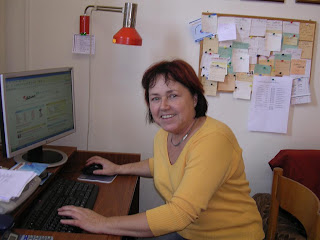
Eliška Petrášová, headmistress


Václava Hanáková, teacher- project coordinator

2008-11-03


PRIMO CIRCOLO DIDATTICO “G. VERGA”

p.zza C. ALBERTO - SCORDIA (CT) – SICILY ITALY

The First Circolo Didattico “G. Verga” is positioned into two different buildings, the first one being located in the "Convento" quarter, and the other one in the “Montagna” quarter, which, because of the complexity of their formation, present themselves globally as heterogeneous areas for the social and economic condition of their inhabitants, but which are characterized as “difficult quarters”, because, once the public offices and the few shops close, concentrated in a restricted area, and lacking of club houses and recreational facilities for the free time and cultural and socializing activities, the area remains “lifeless”. For many pupils, going to either of the two school buildings, this means they have to spend their time out of the school doing activities which praise values distant and misleading from those socially acceptable and the taking on of attitudes which show the shortage and sometimes the lack of the most elementary rules of civil life and respect for people and belongings. This situation turns these pupils into an easy prey for petty crime. On the other hand, families, in most of the cases of the so-called “difficult pupils”, without any expectations regarding the school and the institutions in general, are not able to affect their children’s behaviour, delegating the school itself with the task to take care of their formation. This attitude in general causes a sort of estrangement from the school and demotivation towards its proposals, and in this way it helps to enhance the phenomenon of sporadic frequency and withdrawal.
Family economic problems are to be added to all these problems, which force the pupils to anticipate their entrance to the working community and to accept forms of “illegal job”. The complexity of the social and economic fabric of the quarters reflects into the pupils of the two schools imposing differentiated answers to partly different questions and focusing on the rehabilitation of disadvantaged pupils.

- The website of the school
http://www.scordiaverga.it/
The phone/fax number of the school
0039 095657120

2008-11-02

Short History of Mihai Eminescu National College Botosani, Romania


“Mihai Eminescu” National College-Botosani

At the end of 19th century, Botosani had a prosperous economic life, with a strong middle-class, whose desire was to have their children highly educated. The same demand came from the rural area, too, maybe because of the temporary economic development. The intellectuals of the town took advantage of any occasion to insist on founding a high-school for girls. Eventually, on 4th of September 1887, Spiru C. Haret, the minister of education, signed the Order nr.11983, which was the “birth certificate” for the Secondary School for Girls from Botosani.

The first location of the school was at “Vasilievici House”, with furniture borrowed from “A.T.Laurian” High-school. The first principal was a woman teacher –Eugenia Savinescu– who also taught French language. An interesting fact was the nomination of Virginia Micle –Veronica Micle’s daughter– as a teacher of Mathematics and Science.

From the very beginning, the school was supervised by the Ministry of Education. Thus, there were sent university professors from Iasi and from Bucharest to take part to the graduation exam (1888/1889; 1889/1990). Both teachers and students were also a noticeable presence at the most sophisticated performances and cultural meetings from the town.

Unfortunately, the school confronted to the problem of the location. In 1904, it functioned in “Manoli Houses”, then in “Vasescu Houses” and later in the building belonging to “The Romanian Women” Association. There was not possible to build a special location for this school because of the lack of financial support. Only in 1962, there was built the institution where there is School no.11 now, and where the High-school functioned until 1972, when it was moved to a totally new modern location.

The High-School for Girls from Botosani got the official name “Carmen Silva” in 1928. Between the wars, the institution organized numerous educational activities and collaborated with various charitable organizations from the town, in order to help the poor students. During the Second World War, the students who were refugees were offered free accommodation, and the necessary funds for continuing their studies.

The consequences of those two World Wars, of the Dictate from Viena and of the Treaty Ribbentrop-Molotov are felt by “Carmen Silva” High-School, too. Thus, a great part of the correspondence with the School Inspectorate from Iasi, referred to the evacuation procedures, especially of the archive and of the school materials. The presence of many refugees from Transilvania, Bucovina, Basarabia and Poland (5625 in 1941) determined the local authorities to offer free accommodation and education to an additional number of girls.

During the period: 5th of March–17th of April 1944, the Russian troops invaded the Romanian territory, our town being the first one. The high-school was evacuated in a haste, leaving behind many valuable things: furniture, library, original paintings, crystal mirrors, laboratory equipment etc. The institution was moved to Cermei locality, in Arad. After 23rd of August 1944, because of the Hungarian troops which were in our county, “Carmen Silva” High-School was forced to move to Pitesti, this fact causing a lot of material losses, including the archive.

Finally, after many hardships and risks, the institution managed to return on 6th of April 1945.

Unfortunately more problems were to come. The new politics dictated by the Soviet Union established “new rules” of behavior for both teachers and students, “new interpretations” of the school curriculum etc.

Moreover, the managing staff of the school was forced to give up to many valuable literary works written by Mihai Eminescu, Nicolae Iorga, Ion Antonescu etc., the students being obliged to read new books, such as: “Zoe Kosmodemianskaia” by N. Matrosov, “The Living Factory” by Vasile Roaita etc.

In 1948, “Carmen Silva” High-School was changed into School no.2 and only in 1957 the institution was given the name of our national poet: “Mihai Eminescu”.

During the period 1948-1968, this institution made a considerable progress regarding both the number of students and of the teachers, as well as the diversity of the profiles.

In 1982, the high-school had the honour of organizing the Romanian Literature National Contest, the President of the Evaluation Committee being the famous literary critic Zoe Dumitrescu-Busulenga. Her impressions were: ”I have lived some remarkable days at this high-school which has the name of a star; we have enjoyed the beauty, the peace and the high discipline that dominate in here. I believe that the success of this Contest is due to the special atmosphere created by both the principal of the school (Vasile Pricopie) and the entire teaching staff. I promise to return here as a simple traveler”.

“Mihai Eminescu” High-School repeated its role as a host for the Romanian Literature National Contest in 1987, 2005.

1987 was also the year of celebrating the centenary of the high-school.

In 2002, the institution got the status of National College.

2008-10-30

Primary school Antoine Pizon, Huriel, France


Primary school Antoine Pizon is a six classes rural school located in the middle of France (Auvergne), in a medieval village called Huriel. Children are from 6 to 11 years old. There are 144 pupils and 6 teachers.


It’s the first time the school is involved in a Comenius project and it’s very important for pupils to learn how to become European citizens, to exchange with other European peers and to discover different cultures through an "Amazing adventure”.


As the Comenius project deals with European citizenship, we have chosen to present a local famous French female writer, George Sand, who struggled for freedom and women’s civil rights in the nineteenth century.


Coordinators: FLorence Sérange and Jérôme


2008-10-29

The Netherlands, Wellantcollege


Our school is located in Gorinchem, The Netherlands.


Philosophy :

Wellantcollege is a community in which – in a green educational environment – pupils, students and teachers learn through sharing, using and creating know how.
The students of Wellantcollege in Gorinchem are 12 to 16 years old. They are involved in international contacts by means of Comenius Projects, E-Twinning projects and e-mail projects. Our students have shared projects with schools in Poland, Turkey, Romania, Spain and Portugal. We are looking forward to participate in Amazing Europe.
Teachers involved in Amazing Europe :

Marjan Nijman - Saskia van Klij - Arie Schalk
website Wellantcollege: www.welly.nl click: Gorinchem

Portugal - Agrupamento de Escolas nº1 de Portalegre


We are a group of schools and kindergartens from the city of Portalegre and from the nearby villages.
Children from 3 to 15 years old are distributed by 9 schools coordinated by a single headmaster.


José Régio is the name of the patron of our main school and he will be the central theme of our journey towards an “ Amazing Europe”, built upon an active citizenship.
Amazing Europe Webpage